
Petrol and diesel price on Sunday was hiked again by 35 paise a litre and the auto fuels now cost a third more than the rate at which ATF is sold to airlines. The fourth straight day of 35 paise per litre hike sent petrol and diesel rates to record highs across the country. The price of petrol in Delhi rose to its highest-ever level of Rs 105.84 a litre and Rs 111.77 per litre in Mumbai, according to a price notification of state-owned fuel retailers.
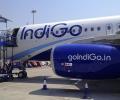
Long-term macro trends indicate growth in demand for air travel. Trends from the ticketing website MakeMyTrip indicate a likely annual growth of between 11-17 per cent in Indian air travel demand over FY24-30. Through that period, InterGlobe Aviation or IndiGo may continue to make gains in market share in both domestic and international travel, aided by large fleet additions. IndiGo is the largest global customer of Airbus by far with 950 aircraft orders outstanding.

No more lavish meal choices, no pampered check-ins and fewer options in flight timings. Call it Plan B or an effort by the airlines in India to cope with the crisis caused by soaring aircraft turbine fuel prices.
Domestic airlines are preparing to offer lower fares for passengers without check-in bags in a move to improve seat occupancy and market share. IndiGo chief executive officer Ronojoy Dutta indicated the airline's interest to offer zero bag fares in an interaction with Bloomberg. Regulatory caps on fares and capacity related to Covid-19 have prevented IndiGo from taking a decision and the airline is discussing the issue with the government, he said.
Deals from online travel portals, in partnership with credit cards, are good.

Taking a cue from price war in the domestic sector, two foreign carriers - Emirates and Air Asia - have cut fares for Indian travellers so as to beat the March quarter blues.

Singapore Airlines' deal with Tata Sons (Tata) will inject a further SGD 360 million ($267 million) into Air India. It will give SIA a 25.1 per cent stake in the enlarged Air India group following its takeover by Tata and merger with Vistara Airlines. The November 2022 deal between Singapore Airlines and Tata Sons to further inject $267 million into Air India is one of the key strategic initiatives for future growth mentioned in the quarterly financial report. This agreement is still subject to regulatory approval. SIA in the statement said, "The merged entity will be four to five times larger in scale compared to Vistara, with a strong presence in all key airline segments in India.

Hit by the third wave of the COVID-19 pandemic and soaring fuel prices, airlines are flying towards record losses with a likely loss of a whopping Rs 20,000 crore for the full fiscal year, warns a report. The airlines are flying towards their steepest-ever net loss of over Rs 20,000 crore this fiscal, which will be 44 per cent more than Rs 13,853 crore they bled last fiscal, Crisil said in a report. This will push back the industry's recovery beyond fiscal 2023, the report based on three large listed airlines--Indigo, Spicejet, and Air India--which together command 75 per cent of the domestic traffic, warned.
Mumbai International Airport (MIAL) has proposed a significant increase in User Development Fee (UDF) for international passengers, while domestic passengers will be charged a UDF for the first time. However, MIAL also proposed a 35% reduction in landing and parking charges, aiming to balance infrastructure development with cost-effective air travel for airlines. The new tariff structure is subject to approval by the Airport Economic Regulatory Authority (AERA).

Strong passenger growth will help domestic airlines improve their top line and margins.

Domestic air passenger traffic grew 5.1 per cent year-on-year to an estimated 138.9 million in May and was significantly higher by around 14 per cent than pre-Covid levels, credit ratings agency Icra said on Thursday. Icra also said the outlook on the Indian aviation industry is stable amid the continued recovery in domestic and international air passenger traffic with a relatively stable cost environment and expectations of the trend continuing in FY2025.
Failure to reinstate salary even two years after the drastic cuts has landed the airline industry in a massive industrial relation crisis. While employees of Air India had organised a strike back in 2011, it is for the first time that private airlines are facing serious stress related to workers. IndiGo witnessed two of them, back to back. In the first instance, around 50 per cent of the IndiGo flights were delayed as a large number of crew members went on mass sick leave, apparently to participate in a rival airline's walk-in job interview.
The increases have snapped a six fortnight trend of reduction in rates.
Air passengers might have a reason to smile this Diwali season as average airfares on many domestic routes have dropped 20-25 per cent compared to the year-ago period, according to an analysis. Increased capacity and the recent fall in oil prices are considered to be among the factors for the fall in air ticket prices. The analysis by travel portal ixigo showed that average airfare on the domestic routes have declined in the range of 20-25 per cent.
The airlines' losses globally are expected to be down from $52 billion in 2021 to $9.7 billion this year and industry-wide profit should be on the horizon in 2023, Director General of IATA Willie Walsh said in Doha on Monday. International Air Transport Association (IATA) represents some 290 airlines comprising 83 per cent of global air traffic. Walsh, in his inaugural speech at the 78th annual general meeting of IATA here, said that while the outlook for airlines globally is positive, the business environment remains challenging.
Rising fuel costs have grounded the high-flying ambitions of India's carriers and have sent their stocks into a tailspin.

Tata Sons on Thursday announced the appointment of Campbell Wilson as chief executive officer and managing director of Air India. Wilson is the founding CEO of low-cost airline Scoot.
'The recent price hike would only be beneficial if the airlines continue to operate at 80 per cent airline capacity. An increase towards 90 or 100 per cent airline capacity would again add pressure to the fares as demand remains muted. Also, we are in the fourth quarter of the fiscal year which is a seasonally weaker quarter,' says an analyst.
Indian carriers can pass on some of the reduction in cost due to the dramatic fall in aviation turbine fuel prices to customers without taking a major hit on their bottomlines. Airlines have also cut costs on a variety of areas, including manpower and distribution, while increasing the fares steeply.

The Cyberster is currently sold in the UK for about Rs 63 lakh and is expected to be priced between Rs 65 lakh and Rs 70 lakhs.
Airports levy charges such as FTC, infrastructure charge, and into-plane charges on sale of jet fuel. The levy is passed through to airlines, pushing up costs.
The move if implemented, will be a temporary measure to protect both consumers and airlines. A section of airline executives and experts, however, warned that any intervention in pricing would be counterproductive.
Replying to questions on losses to Air India, civil aviation minister Praful Patel said the rally in international crude oil prices that touched $147 a barrel in July 2008, hit Indian carriers by Rs 10,000 crore (Rs 100 billion) in jet fuel bill. Air India loses are a result of high jet fuel prices and fall in air traffic following global economic slowdown, he said. "There are (also) systematic issues which need to be corrected."

India's ailing aviation sector can finally hope to get some relief. The Union Minister of Civil Aviation, Praful Patel has announced that a Group of Ministers (GoM) has been formed to look into the issues faced by the aviation sector.

Pakistan's national flag carrier on Thursday suspended flight operations to Afghanistan due to what it called "security concerns", hours after the Taliban government threatened to ban the airline unless it reduced the fare on the Kabul-Islamabad route to previous levels.
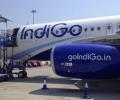
Shares of low-cost airline IndiGo hit record high on the bourses soon after reports of pilot crisis at Vistara emerged. The development also saw airfares surge by around 25 per cent on select routes. Shares of IndiGo hit a lifetime high of ~3,68.5 on April 2, 2024, and has gained 2.4 per cent on the bourses in April.

'Even if India is attractive, FPIs currently lack the funds to invest, as money is being redirected to the US.'
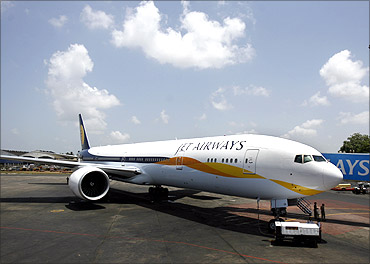
Refuting all the allegations, IOC has clarified that no monopolistic situation exists in supply and pricing of aviation turbine fuel (ATF) to airlines.
For any airline to be eligible for restructuring, the current ratio has to be equal to or higher than 0.4, while 'debt to Ebitda' has to be equal to or less than 5.5.
Tata Group, which will now include Air India, Vistara, and Air Asia, has the highest market share of departures on the top 10 routes in the country. According to the data from Caladrius Aero Consulting, which tracked the departure data for eight airlines in August and September, Tata Group is ahead on all the top 10 routes ranked in accordance with the number of departures in August-September 2021. On the top 100 routes in terms of departures, Tata Group is ahead of its chief rival IndiGo on 30 of them.
'Our focus is not going to be metro to metro routes.' 'We will begin by focusing on metro to non-metro (routes).' 'Metro to tier-2 cities or tier-3 cities is where there is a lot of space for affordable, efficient carriers.'
China's state-run Sichuan Airlines has suspended all its cargo flights to India for 15 days, causing major disruption to private traders' efforts to procure the much-needed oxygen concentrators and other medical supplies from the country despite Beijing reiterating its readiness to help India to deal with the latest surge of COVID-19 cases.
India's largest carrier IndiGo will cut 20 per cent of its flights due to lower demand as a rapidly spreading coronavirus upends the recovery of air travel. The airline was operating around 1,200 flights as on Saturday. Other airlines are being forced to cancel flights as states tighten restrictions to combat the spread of the virus, and people are dropping last-minute travel plans. Airlines carried 2,518 passengers on 260,251 flights on Saturday, compared to 2,794 passengers on 358,856 flights the day before.
Rakesh Jhunjhunwala-backed new airline Akasa is in talks with US aerospace company Boeing for buying up to 100 737 Max aircraft. Former Jet Airways CEO Vinay Dube and his family members are promoters while ex-IndiGo president Aditya Ghosh is a board member of the airline. The airline is in negotiation with Boeing and has reached out to the government to recertify the aircraft which has been grounded since 2018 after two crashes killing 349 persons, according to sources in the know.
Within two weeks of many airlines deciding to roll back salary cuts encouraged by a steady increase in traffic flow, a second wave of coronavirus along with rules of compulsory RT-PCR test has hit forward bookings. The fears of last summer, when the pandemic had overturned all the wisdom of airline boardrooms, have returned to haunt the aviation industry. According to an official in the Ministry of Civil Aviation, flight occupancy is down to 60 per cent from 70 per cent in the first week of March. Airline lobby group IATA estimates that low cost airlines need to fly at 80 per cent occupancy to be profitable.
Prices of tickets booked three days prior have soared 70% over last summer's fares
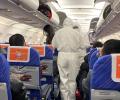
Vistara started allowing passengers to book an extra seat from Tuesday. IndiGo and SpiceJet, too, are in the final stages of designing such a product to be sold as an add-on.
Airlines are now pushing up fares and hopes to improve margins over the next three months to make up for the poor September quarter, even if it leads to a slight fall in their passenger load factor.
With airfares mounting in the last couple of weeks primarily due to cancellation of Kingfisher flights, aviation regulator DGCA on Thursday warned airlines not to raise air ticket prices beyond a given range.
Post handing over of Air India to the Tatas, government officials will be free to book their travel with any airline that offers them the best price. And, the Centre will not have a tie up with any carrier, department of investment and public asset management (DIPAM) secretary Tuhin Kanta Pandey said. "The government is not mandating travel by any particular airline, going forward, after handing over Air India because there won't be any state-owned airline," he said. The department of expenditure (DoE) will soon issue instructions to government departments for official travel as this needs to be done before handing over Air India to the new buyer, he said.
